The Trail to the Oxus: Visiting Panjsher during the war

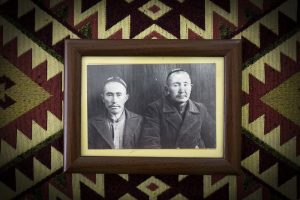
The author with guerrilla commander, Ahmad Shah Massoud during his visit to Panjsher in 1989
By Shahzada Khush Ahmad ul Mulk
(The writer (1920-2017) was the last surviving son of H.H Mehtar Shuja ul Mulk, ruler of Chitral. He received his education from the Doon School in Dehra Dun, India and served in the Army before working as Administrator of Afghan Refugees during the Soviet invasion of the country. He was an ardent environmentalist too. Khush travelled to Panjsher in 1989 and met the famed guerrilla commander Ahmad Shah Massoud. The thrilling account of his travel is reproduced here with courtesy to Ahmad ul Mulk)
Seventy plus is not quite an age to take on ambitious travels in the raw and rugged wilderness of the Hindukush. But why not? My association with our Afghan brothers, ever since the invasion of their country by the Soviets, had imbued in me an urge to visit that land while one was still up and about.
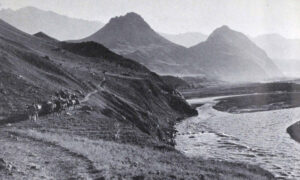
Over the past years I had the occasion to witness refugees, old and young reach Chitral in a terrible shape, after facing the hazards of extreme winter conditions, over the high and precarious trails of the Hindukush. When the Soviets blocked and mined the Dorah route (14,000 feet) into Chitral, these refugees started frequenting the Anjuman, Qitan, Munjan, Kafir Kotal and Zedig passes. The journey sometime lasting a month. Many an animal and human being perished on the way due to the harsh terrain and weather, as well as due to Soviet air action and ground mines. But once the Pas Qitan plain was also occupied by the Soviet Kabul forces, even these rugged and ordinary routes were denied to the refugees from Northern Afghanistan, till Ahmed Shah Masood’s forces threw out the enemy from Pas Qitan.
Also Read: BBC on the demise of Khush Ahmad ul Mulk
I thus set out on my first journey in September 1989 which, however, ended in a post-haste retreat after my first night in Afghanistan due to ill-planning an early onset of snow and blizzard on Durah Pass, and a lame mule that was helping us with our journey.
We set out from Shah Salim, which lies at the foot of the Durah Pass on the Chitral side. The weather was fine and we immediately became a part of the hundreds of Mujahideens on their way to the front: But, by the time we were in the middle of the mountain, the sky became overcast with thick clouds, and soon a raging blizzard covered our path. Our mule fell down twice and the load had to be rearranged each time. Realization that the man I had employed was far from competent for this long journey, way very disconcerting indeed.
My own know-how about mules and their loading being nil, trouble lay ahead. The Mujahideens had by now been shooting ahead and when the mule fell a fourth time, we were in the middle of the pass on the Afghan side. This time the animal refused to budge.
By now our hands and feet had started freezing because of the blizzard. There was some warm clothing in the baggage but trying to take them out under the freezing wet conditions, meant wasting precious time. However, this was no time for indecision. The sleeping bags being on our individual back packs we left the entire baggage on the spot and moved ahead with the horse and mule as fast as we could. We were to reach a place called Topkhana, which had changed hands several times.
Also Read: 7 July 2025: Amir Ullah Khan Yaftali of Laspur Passed Away
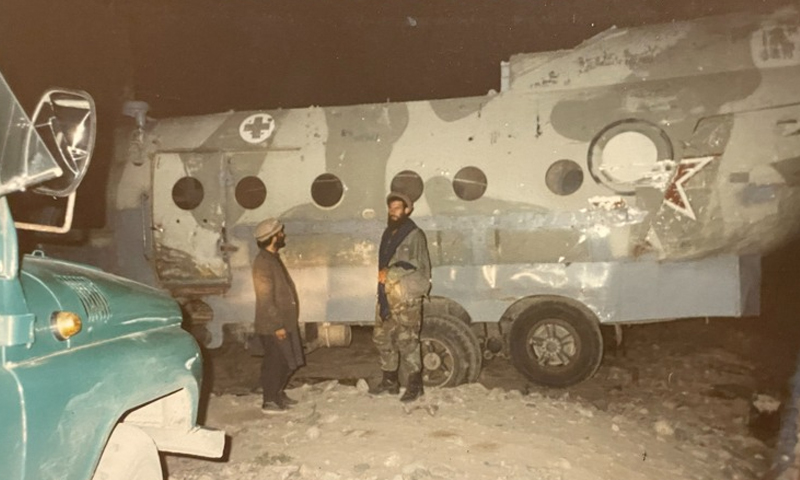
Hurrying along we came across some tents being used as Inns-cum restaurants. Further on were two helicopters which had been downed by the Mujahideen in 1981/82. Ahead was a place where the track had branched off in two directions. One was certainly mined. Fresh snow having covered the foot marks, it was difficult to know which path to take. As darkness had set in there was no way but to return to the confines of the so-called hotels, which under our present condition were more inviting than the Dean’s in Peshawar.
Many on animal and human being perished on the way due to the harsh terrain and weather, as well as due to Soviet air action and ground mines. But once the Pas Qiran plain was also occupied by the Soviet Kabul forces, even these rugged and arduous routes were denied to the refugees from Northern Afghanistan, till Ahmed Shah Masood’s forces threw out the enemy from Pas Qiran.
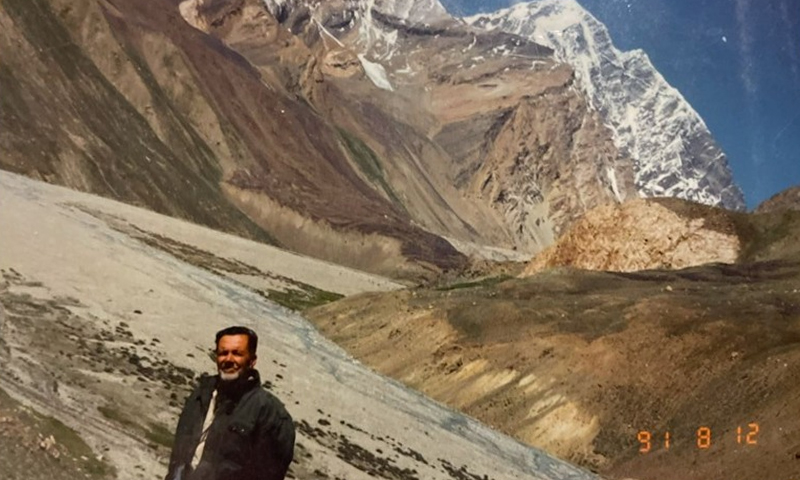
Luckily one of the Mujahideen recognized me as the former Administrator of Afghan refugees in Chitral or the “Commissioner” as they used to call me. Thereafter, everybody was very considerate and I was allotted a special place in one corner. Getting into the sleeping bag, jacket and all I requested them not to wake me up for the meals. This invariably consists of dry bread & black tea, throughout these journeys and you become less conspicuous by sharing the same food.
While sleep refused to come due to the cold, some hard thinking had to be done. Looked as if winter might arrive earlier than expected, and that would mean getting stuck in Afghanistan till next summer. I had neither catered for that nor was prepared mentally for such an eventuality. Moreover, the baggage left on the mountain, no one was prepared to go back and bring it, even on substantial payment. That had decided the issue in favor of a cancellation of the trip, during the first venture into Afghanistan.
Also Read: 1985: Russian Air Attack on Chitral
Having survived my maiden morning on “Khaake Paake Afghanistan” I found the baggage intact where it had been left the previous evening. As an afterthought a prayer rug had been diplomatically spread over the bags, little remembering that the faithful all over can resist anything but temptation. But they certainly had.
On the way back I met the two journalists on the pass, who had been having trouble in Chitral, in getting permission to cross over. These were John Gunstan and Steve Le Vine. They were being guided by a young Afghan doctor and helped across by Abdul Haque Tarjuman, a Panjsheri elder. But our intelligence ——— had their own stories to tell and had reported that I had helped them across. Forgetting the fact that like getting plots here and there was no problem for some of us, similarly crossing over into Afghanistan was no dilemma for these foreigners.
In the former days and earlier times, when the entire region was more than wild, Europeans, of every description, went into the interior of High Asia at great personal risk. Either for the love of adventure or in the service of their countries; their efforts getting due recognition and appreciation. But here it was just the reverse. While enemy agents sabotage at their sweet will, our intelligence people waste precious time chasing their own tails round and round.
As I was busy next summer of 1990 my refugee friends thought that August 1991 would be fine. Consequently a few days trek in Agram valley during July in the company of two perennial wilderness enthusiasts, Isobel Shaw and Elizebeth Gardner helped me to shape up for the arduous journey ahead. A good experience of three full days of unexpected snow. My tent had to be eventually put up in a more than leaking but covered over by a plastic sheet. Anyhow life in the mountains is itself a rough exercise, keeping one on one’s toes and trim all the time.
Also Read: Dorah Pass in Chitral: A Historical Background
On the way to Shah Salim, I was joined by Aghai Paiman and Agha Dr. Nasim and a young Algerian doctor, Abu Hamza on his fourth visit to Afghanistan. We got to the same tented establishment for the night where I had spent my first night in Afghanistan a year and half ago. This time by jeep.
Fearing that they may dissuade me from going on this journey I had not informed my sons or anybody else at home and so I sent them a letter from here, telling them not to worry as I was among friends, which was very correct because of my influence amongst the Afghan Refugees in Chitral.
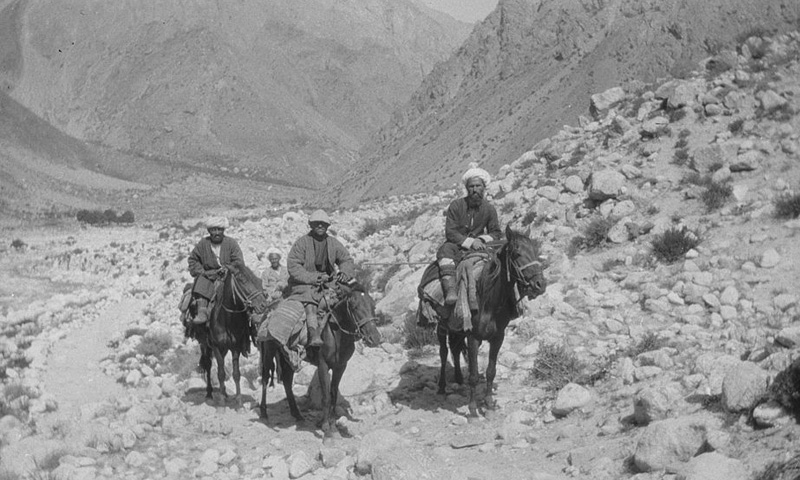
Setting out on 11th August 1991, the whole journey lasted till 17 September 1991. Of this, fourteen days were done on horseback and on foot, fording several rivers on horse and crossing six passes, the rest were done by jeep provided most kindly by Ahmed Shah Masood. Having been informed about my intended visit, he was in fact most considerate. Accordingly, I received every regard and help wherever I went. Surprisingly, extremely few Pakistanis except Air Commodore M.M. Alam retired, had visited the area during all these twelve years. Why Masood’s area of command and control received such a glaring stepmotherly treatment is not understood despite the explanation given by Brig. Yousaf in an interview to a journalist on the Silent Soldier.
“Masood did not allow others to operate in his area”. How wonderful. Thereby Takhar and Panjsher were prevented from turning into another Kunar. Anyhow the journey took me through parts of the province of Badakhshan, the whole of Takhar and the entire valley of Panjsher.
Also Read: Rahman Qul and Kirghiz Nomads: A Story of Exodus and Transition
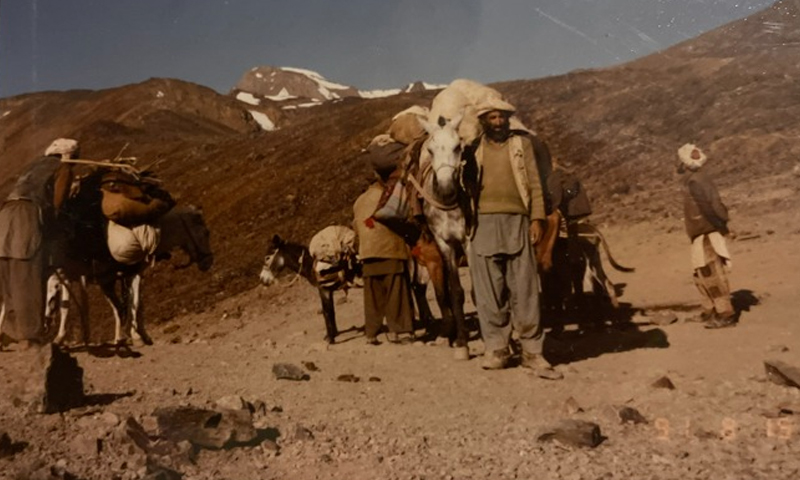
Some of the tracks passed through the most rough and wild areas with hardly any habitation around. We traveled from early morning to late in the evening. Spending nights near so called hotels on the wayside amidst a motley of donkeys, mules, horses and baggage every description. An assorted variety of lethal ammo and other baggage dumped all around on top of each other, the buzkashi way. Thus, one grabbed what you could in the form of food and sleeping space. Animal and men kept on arriving till late at night, and we had to snatch some sleep off and on, till it was time to be on our feet again.
One and half day of the riding part of the journey was spent in a marshy area called Darqad along the river Oxus or Amu along the Tajikistan border. This involved wading arose the formidable Amu and several of its close cousins on horseback. The camera had been handed to Doctor Nasim to take photos while crossing, but coming to the river I thought good God. I hope they don’t decide to cross this! One could see the doubt on the faces of some of my companions also, but nobody suggested calling it a day to return the way we had come. So how could I let down the Islamic Republic of Pakistan and how was our fellow. Turcomans to know that we had done little else all these glorious years?
With the accompanying Uzbegs having jumped on the back of our aquatics, prayer was very fervently read in the midst of the swelling Oxus, with the Uzbeg breathing hard behind my ears. I have done some scary river crossings on horseback but this was really something. When you have the reins and the whip in your hands it is something else altogether. It is feared that our Uzbeg may not have been impressed by his first Pakistani and I could not tell him that I would still rather have my Pakistani life in my own hand. Anyhow deep in the turbulent Oxus was no place for a dubious dialogue with an Afghan, when one on solid ground was formidable enough.
That day we had started from Darqad at daybreak and reached Yange Qila at 10 p.m., through a terrain where a small group of bandits could hold up a brigade anywhere on the way. I did not carry any arms throughout the journeys in the province of Badakhshan, Kapisa and Takhar. The need never arose. We travelled through the recently liberated areas of Khoja Ghar, Dashte Qila, Yungi Qila, Ahe Khanum, Darqad, Chiab and Rustaq. Ahe Khanum is a 5,000-year-old underground ancient city situated right on the bank of the Oxus. Barthold, the Russian writer, calls it by the name of Barbera in his book “Turkistan”.
Also Read: 2025: Pakistani Climbers Summit Terichmir
Near Rustaq we came across the sight of a multipurpose dam – over the river Kokeha which the Russians were supposed to be building for the last thirty years. Except for some Katcha building for the labourers, some offices spread over with propaganda materials and plans, and a lot of machinery and hardware left behind in a hurry, not one stone had been placed on the other.
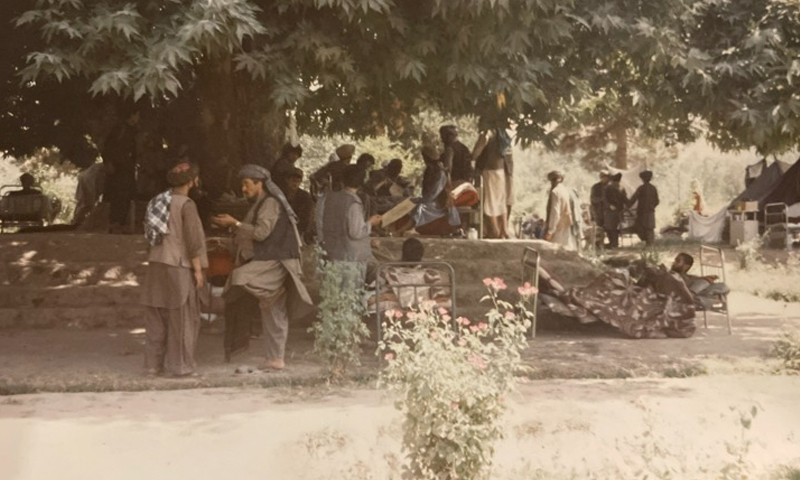
Law and order were very much manifest wherever we went. You could see that a nucleus of a government was functioning under the most difficult economic circumstances prevailing. New roads, hospitals and schools had been built, Masood’s authority was decisive and complete without any outward bluster, frenzy, push and bullying. Commanders were very much there aiding the civil establishment, but they functioned without stepping on anyone’s toes. Movement of people with arms was most inconspicuous. Except for the apparent signs of war in the form of abandoned armor of every description through the theatre of war in Takhar and, much more so, in Pansher and the glaring ugly harvest of the recent bombardment of the city of Taaluqan, you could not imagine that this was a war torn country.

Taaluqan was an abandoned city. A make shift hospital was set up in a village after the main hospital was hit. The bombs had been dropped from a great and safe height, killing at random. The city was bombarded again a day after we left it. This time a UN worker was also wounded. On the way, we met the BBC team who were in Taaluqan during the first air action.
From Takhar the journey over the Kohe-Zard into Panjsher was more than difficult for even a young man of 72. It was an almost vertical rocky path, riding over which was most difficult, and certainly cruel for the horse. I don’t think it could have been less than fifteen thousand feet at least.
Taaluqan was an abandoned city, after the glaringly ugly harvest of recent bombardments. A make shift hospital was set up in a village after the main hospital was hit. The bombs had been dropped from a gread and safe height, killing at random.
Also Read: The History of Badakhshan from the 7th to the 19th Century
Has anyone truly described the havoc and devastation that the narrow valley of Punjsher had witnessed, or what its inhabitants have gone through? From Dashte Rewat to Bazarak, and beyond, in a distance of about 120 km or so, almost ninety percent of the houses were destroyed and the rest damaged. All the wrath and powers that had rained down fire and damnation on a small people trapped in these narrow valleys. As if bent upon obliterating every sign of life from the valley of Panjsher.
Ahmed Shah Masood and initially a very small band of hardly twelve Mujahids took up the challenge. These few early names are well known all over Panjsher. From here gathering force very gradually, it took them seven long years of Blood, tears and sweat to throw out the colossus from their soil. Half of the tanks, guns etc. have been dragged away by the Russians or dismantled and carried away by scrap merchants. Those that are still left there scattered all over the valley, speak up and display the daring deeds of these small bands under the inspiring leadership of a remarkable man.
Having no house after the one was destroyed, Ahmed Shah Masood, his two children and wife share his father-in-law’s small inconspicuous house in a village. The first question confronted by any stranger to the area, is “Have you met Aamir Sahib, what do you think of him”? As Masood is well known for his dislike for smoking, you can hardly find cigarettes in the shops. Not that there are any orders, or the police or the Mujahideens squeeze your what nots for smoking or fine the shopkeepers. Cigarettes are there, people do smoke, but respect and regard for the Man’s wishes are very much manifest all ever.
The return from Panjsher over the Anjuman pass was very pleasant and enjoyable. But at the last stage of the journey when everything had passed off so peacefully our Mujahideens confronted me with a very trying experience. By this time the motorable road had progressed a few miles further than Topkhana towards Panjsher. My baggage on the other horse and the man with it having gone well ahead I was all alone and had reached the area Topkhana heavily mined by the Russians. Here, up comes a huge truck full of rowdy Mujahideens. My pony had probably never set eyes on such a huge monster. An otherwise lively but gentle horse, rearing up and shorting wildly he was ready to bold for his life in either direction. On seeing this our friends in the lorry started drumming on the sides in unison, obviously great fun for the holy warriors. Holding MP back from almost certain mutual destruction was quite a job.
Also Read: The Ismailis and Kirghiz of the Upper Amu Darya and Pamirs in Afghanistan
However, somebody in the lorry brought order about and spared me the exercise of galloping right into a minefield. With almost five to six hundred loaded animal and men passing in either direction and the Mujahideens behaving in this frolicsome way I could not help thinking of the order and discipline in the areas under Masood’s control.
Spending the night in the same hotel, strangely enough this time all alone, because hoping to get a lift I had send both the horses and the men away during the night. It was rather risky but then, if you look at it, everything is risky on these journeys. Next day I reached the hot springs to a well-earned bath and rest in my nephew Shuja’s house. My people at home were more than surprised to see me back. It reminded me of the man who upon entering heaven was surprised to see the various well-known personalities there. But looking closely at people’s faces he got the shock of his life, because it seemed that he was the last man that they were expecting there.
The above hurriedly and badly written account should have been a book, but the blooming trouble with a plant lover is that he is not ambitious – a blessing in disguise.
Posted on 16 November 2025