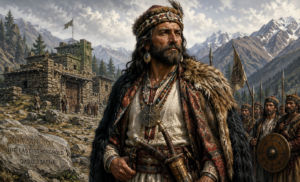
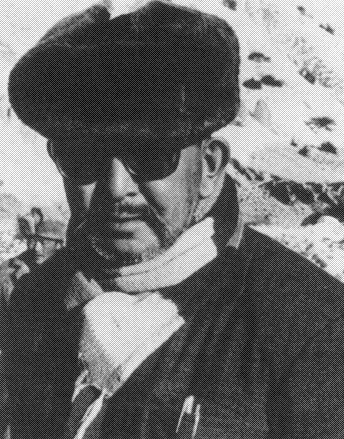
Meeting with Rahman Kul, Leader of the Kyrgyz Tribe from Wakhan
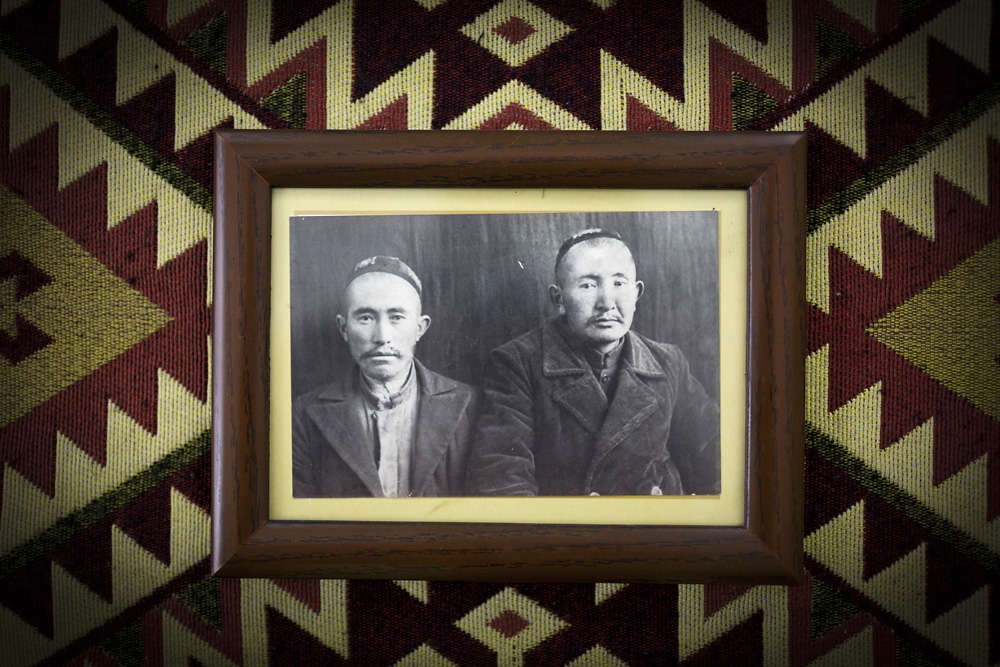
Haji Rehman Kul, right
(Bernard Repond hails from Switzerland. He approached Khowari via e-mail, and on our request, he was kind enough to share the account of his interaction with Rehman Kul and his Kyrgyz tribe who once inhabited Wakhan before moving to Chitral and Gilgit and finally settling inTurkey)
In January 1979, I, Bernard Repond and my wife Rose-Marie Repond were at the Gilgit bazaar, at the foot of the magnificent Karakoram Mountains in Pakistan. In a photo shop, I recognized Rahman Kul, the leader of the Kyrgyz exiles from Afghanistan in the Gilgit region—an exile triggered by the communist coup in Kabul. After reading Roland Michaud’s book “Caravane de Tartarie” and an article in National Geographic, this is the reason why I knew the existence of Rahman Kul.
Also Read: Rahman Qul and Kirghiz Nomads: A Story of Exodus and Transition
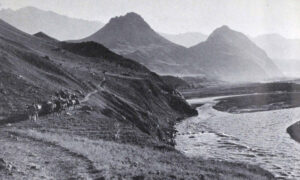
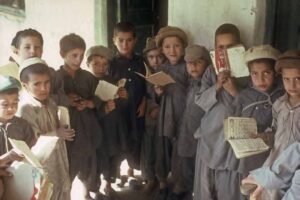
Speaking Farsi, I approached Rahman Kul who was not surprised that a European could speak his own language. The latter invited me and Rose-Marie to meet his refugee community in the village of Imit, located a 7-hour drive from Gilgit. As the only tourists, I and Rose-Marie set off with 12 other locals in a Willis jeep for an epic journey, armed with a note written by Rahman Kul for his son Malik. We would spend an intense and unforgettable week with the Kyrgyz who just arrived up there a few months before, as refugees, from their native Wakhan high plateau
For four years, contact was sewered. Then, in Spring 1984, I learned that the Kyrgyz from Afghanistan had been flown to eastern Turkey. In September I traveled to Van and was reunited with Chief Rahman Kul, Malik, Akbar and the other exiles. Contact was reestablished. From this friendship emerged a book showcasing the Kyrgyz of the Afghan Pamir, their culture, and their journey into exile through Malik’s drawings.
Since then, I went almost every year to pay a visit to their new home in Ulu Pamir, located north of lake Van in Turkey.
Rahman Kul passed away in Turkey on August 6, 1990. His son Malik, a self-taught artist and painter, passed away on December 7, 2013, two weeks after my last visit. Arif, another son of Rahman Kul passed away in 2015
Other news
In September 2010, with 3 friends (a Swiss woman and 2 Kirghiz young men) I went up to Little Pamir in Afghanistan. They are still around 1000 Kirghiz nomads “surviving” up there. The conditions are extreme and opium has an extreme bad effect on the health of these people.
We have organized with the help of our Kirgiz friends a big exhibition of Malik’s original drawings depicting life in the Little Pamir. This journey into exile was exhibited at the Bishkek Museum of Fine Arts in April–May 2012 as part of the “Unique Journey” exhibition dedicated to Ella Maillart (a Swiss woman who traveled to Kirgizstan in the 1930) and the Kyrgyz people of the Little Pamir. The drawings of Malik are currently still in the care of his brother Musadek, who lives in Kyrgyzstan. In accordance with Malik’s wish, we are seeking a way to display them permanently in Murghab, the region of origin of the Rahman Kul tribe or in Kirghizstan.
Also Read: My Heartrendingly Tragic Story. Shaikh Muhammad Abdullah Khan ‘Azar’
In October 2025, I paid a visit to Akbar Kutlu and his family. Akbar is one of the sons of Rahman Kul. He is sculptor and lives in the city of VAN in eastern Turkey. He is the one who has collected the memories of his father and family along with this younger brother Musa who lives in Bishkek.
Musa has set up a small private historical museum in his house. This has a great value for the Kirghiz people of Wakhan. I met him at his house in Bishkek last June 2026.
Today, in 2026, the Kyrgyz community in Turkey originating from the Little Pamir numbers 5,000 people and more. They have become Turkish citizens. They have settled down in every part of Turkey.
Lately I have heard that Chinese are trying to build a road across Wakhan. Is it good or bad? The future will tell
Note: Since my teen-aged years I was interested in world history and geography with a big interest in Turkey, Afghanistan, Pakistan, Nepal and the Central Asian Countries for their geography, history. And over that by the nomadic way of life.
In 1996 I was in Afghanistan for 2 months and traveled alone to many parts of that country that was peaceful at that time. I went up to the village of Barack, close to Wakhan corridor. Due to the lack of permission, I was taken back to Faizabad by police/army. But my “Wakhan dream” or goal stayed in my head forever. And finally I could go up there in 2010, crossing the border at Eskashem from Tajikistan.
Today Afghanistan is under an extremely brutal dictatorship.
Posted on 30 August 2026