Agreements After Chitral’s Accession to Pakistan
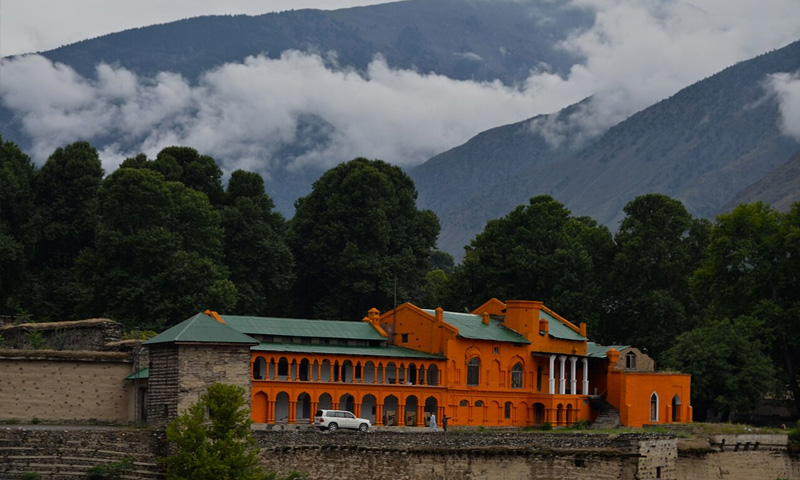
Chitral Fort, 2015
by Sarwar Sehrayee
After the partition of the Indian subcontinent in 1947, the newly established state of Pakistan and the former princely states within its political, administrative, and geographical boundaries had to enter into accession agreements. This legal process became known in history as the “Instrument of Accession”. In English, the term “Instrument of Accession” is used for this purpose.
The focus of this post is the accession agreements between the former princely state of Chitral and the newly established state of Pakistan, along with two subsequent agreements, and a brief analysis of their effects.
First Instrument of Accession (November 1947)
After exchanges of delegations and correspondence, an accession agreement was concluded between the Mehtar of Chitral, His Highness Muhammad Muzaffar-ul-Mulk, and the Governor-General of Pakistan, Quaid-e-Azam Muhammad Ali Jinnah. The agreement bears the date 6 November 1947, signed by the Mehtar of Chitral and the Political Agent of Malakand Agency. However, formal approval was granted by the Governor-General of Pakistan on 29 February 1948. Therefore, the official implementation of this accession is generally considered from that date.
Also Read: چترال کا 1877ء میں کشمیر کے ساتھ ہونے والا معاہدہ کیا تھا؟
This agreement is recognized in history as the First Instrument of Accession. After this agreement, Pakistan’s authority became dominant in political and external affairs in Chitral, as in other princely states, effectively replacing British India. However, internally, Chitral retained its traditional autonomy.
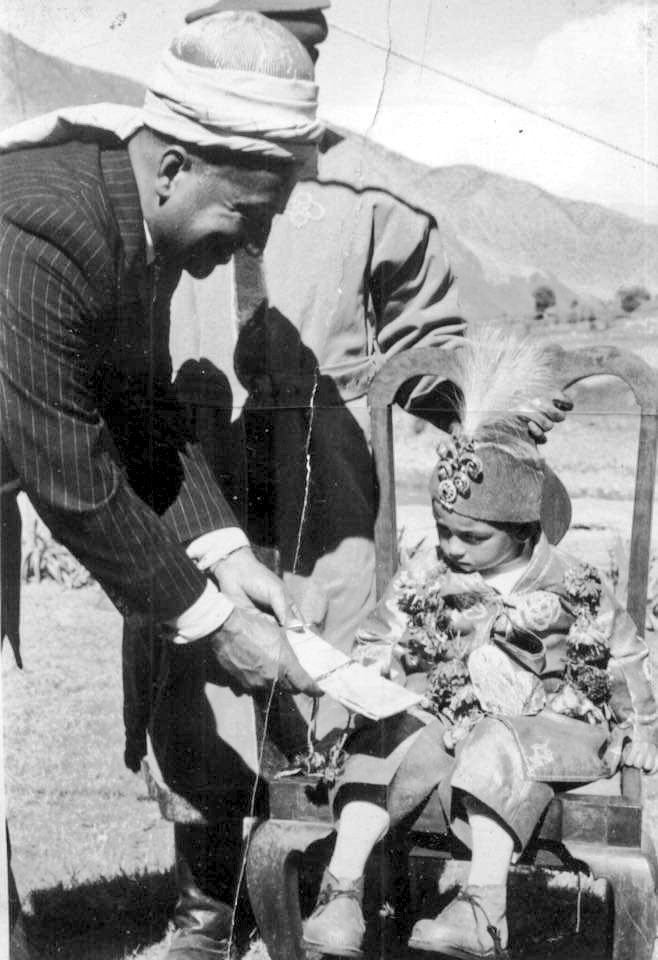
This arrangement continued until 9 December 1949. After independence on 14 August 1947 and the establishment of Pakistan, Assistant Political Agents continued to be appointed in Chitral in continuation of the British system. Although appointed by the Government of Pakistan, some of them were British officers. For example, the last Assistant Political Agent, Major Oldrini, served from 17 January 1949 to 17 May 1949. In the post-accession period, the Assistant Political Agent retained the same powers as in the British era. The traditional administrative system of the Mehtar also continued, with some reforms and adjustments.
However, during the rule of Muzaffar-ul-Mulk and later his son, His Highness Saif-ur-Rehman, political and administrative conditions became unstable, which led the Government of Pakistan to move toward another agreement to stabilize the situation.
Second Instrument of Accession (1949)
Under this agreement, during the absence of Mehtar Saif-ur-Rehman from the state, an Administrative Board was formed to run the affairs of Chitral. This board was established with the proposal of the Government of Pakistan and the consent of the Mehtar. It was formed on 9 December 1949 under the leadership of Assistant Political Agent Rahim Dad Khan.
The board consisted of only three members: Prince Shahabuddin representing the ruling family, and Ataliq Sarafarz Shah and Syed Nadir Shah representing the public.
The Mehtar was called to Peshawar by the Governor of the North-West Frontier Province (now Khyber Pakhtunkhwa), apparently due to political and administrative considerations, and he left Chitral on 16 October 1949. The Government of Pakistan effectively kept Mehtar Saif-ur-Rehman away from state affairs for about three and a half years, until 12 April 1953. This prolonged absence is often described as a form of “detention” in local accounts.
Also Read: چترال اور وسط ایشیا کے تاریخی روابط
Some sources, including the book Kafiristan by Mahmood Danishwar Irani and another English work by Lieutenant Colonel Muhammad Afzal Khan, attribute the disruption in his rule to his marriage, which allegedly escalated into armed conflict between the states of Dir and Chitral, requiring intervention by the Government of Pakistan. However, “Nai Tareekh-e-Chitral” does not mention this incident in detail and only states that he was sent to Peshawar for training.
It does mention an incident in March 1949 titled “Shorish-e-Ahal-e-Mastuj”, in which Ataliq Sarfaraz Shah was declared guilty, arrested along with his associates, his property confiscated, and he was dismissed. However, in May 1949, the Political Agent of Malakand re-investigated the matter, declared him innocent, and ordered his release and restoration of property.
Under this second arrangement, several reforms were introduced, including replacing forced labor (begar) with paid labor for public works, reducing the Judicial Council from ten to three members, and including representatives from both the State League and the Muslim League. A state motor service was also introduced between Chitral and Drosh.
One major decision was that all cases decided up to the era of Mehtar Nasir-ul-Mulk (1943) would not be reopened. But this also meant that all cases pertaining to the period of Mehtar Muzaffar Ul Mulk and thereafter are subject to reopen. This decision was also approved by the Pakistani government.
Also Read: 1947: The news of the accession of Chitral state with Pakistan reported in Dawn
According to Nai Tarikh-i-Chitral, a political organization called the Muslim League gained strength in September 1949 under the leadership of Maulana Noor Shahideen. This organization demanded responsible government and reforms.
It is generally believed that these events led the Government of Pakistan to conclude the Second Instrument of Accession with Mehtar Saif-ur-Rehman.
Third Instrument of Accession (1953)
Like the earlier agreements, this one also had a political background and was a continuation of ongoing administrative and political tensions. At the same time, both the bureaucracy and the state of Pakistan were inclined toward the gradual integration of princely states, similar to developments in India.
By 1950, political influence of the Muslim League had increased significantly. In response, the ruling elite formed an opposing alliance called the “Ittehadi League” (locally referred to as “Pukhti League”). This group supported the restoration of traditional rule under an Islamic framework under Mehtar Saif-ur-Rehman after his return.
Also Read: From Kafiristan to Nuristan: The Forced Islamization of the Hindu Kush Pagans
According to Mahmood Danishwar Irani, three political groups existed in Chitral at the time: the Muslim League, the Ittehadi League, and a third group called the “Quran League”. The Muslim League supported reforms and modernization, while the Ittehadi League supported restoration of traditional rule. The Quran League was considered a smaller faction aligned with the latter.
In this environment, the Government of Pakistan prepared a plan for the return of Mehtar Saif-ur-Rehman under a constitutional framework. Before his return, he was required to sign an order transforming his rule into that of a constitutional head rather than an absolute ruler. This order was published in the NWFP Gazette on 29 September 1953 under the title “Government of Chitral (Interim Constitution) Act, 1953”. This is considered the Third Instrument of Accession.
Key provisions included:
- The Mehtar would remain the ruler of Chitral.
- He would receive a privy purse determined by agreement with the Governor-General.
- Chitral would become a federated state under Section 6 of the Government of India Act 1935.
- The Constitution of Pakistan would apply to Chitral.
- A Council of Advisors would be established under a Chief Advisor, consisting of ten members, half nominated by the Mehtar and half elected.
Elections were held, and Muslim League candidates won all five seats, while the Mehtar nominated five members.
As a result of this arrangement:
- The earlier administrative board was abolished in October 1953.
- A police station system was established.
- A formal police force was created.
- In March 1954, the state bodyguard force of about 6,000 personnel was abolished.
- In April 1954, traditional offices such as Governor, Hakim, Ataliq, Charvelu, Aqsaqal, Bramosh, and Chharbo were abolished.
- The state was reorganized into two districts and six tehsils, with Deputy Commissioners and Tehsildars appointed.
- Muslim Personal Law was introduced.
- Laws prohibiting opium consumption and protecting forests were enacted.
- Jizya on non-Muslims was abolished.
- Inheritance law was introduced on 29 April 1954.
- Urdu replaced Persian as the official language.
- Between 1954 and 1970, major expansion in education occurred, including 32 primary schools for boys, 5 for girls, and separate high schools for boys and girls.
(The article was originally in Urdu, and has been translated under editorial supervision in English by Chatgpt)
Posted on 7 May 2026