Victory Against Cretinism and Goitre: How Iodized Salt Transformed Chitral and Gilgit-Baltistan
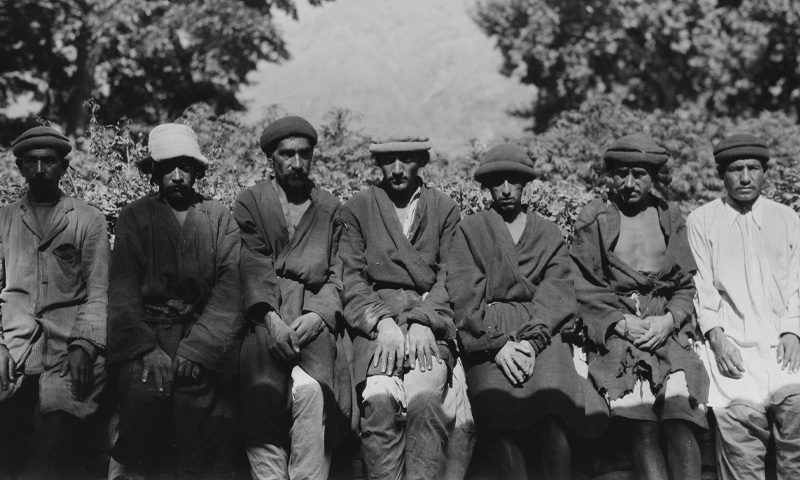
Garam Chashma valley Chitral, 1929, Picture by george Morgenstierne
Khowari
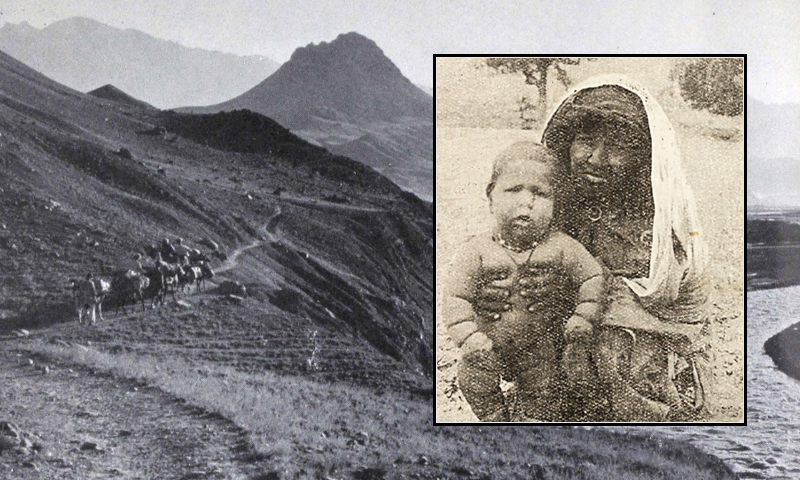
In the past, the medical conditions of cretinism and goitre—locally known as Ghot and Guruli respectively—were widespread in Chitral and Gilgit-Baltistan. Nearly every village had residents suffering from severe physical and mental developmental impairment from early childhood, while many others developed goitre, an abnormal enlargement of the thyroid gland in the neck. Surveys conducted in the region reported goitre prevalence rates of 70–80 percent, along with numerous cases of cretinism.1
One of the earliest scientific investigations into these disorders was carried out by Captain Robert McCarrison, a British physician and surgeon stationed in Gilgit. In 1908, McCarrison published a detailed house-to-house study of 203 affected individuals in the Chitral and Gilgit valleys. His research examined the relationship between goitre, maternal health, and the occurrence of cretinism in these isolated mountain communities.2
Also Read: Before Iodine: A British Doctor’s First Study of Goitre & Cretinism in Chitral & Gilgit-Baltistan
Although McCarrison recognized a clear connection between goitre and cretinism, he did not identify iodine deficiency as the cause. Instead, like many physicians of his time, he believed the disorders were linked to harmful environmental influences or unknown factors affecting the mother during pregnancy.
Later scientific research established that the real cause was iodine deficiency. Iodine is a small but essential nutrient required for normal thyroid function, physical growth, and brain development. In mountainous areas such as Chitral and Gilgit-Baltistan, soils are often naturally poor in iodine, resulting in low iodine content in locally produced food. This made the population highly vulnerable to iodine deficiency disorders.
Health experts concluded that the most effective solution was the regular use of iodized salt in household cooking. This issue deeply concerned Prince Karim Aga Khan IV, spiritual leader of the Ismaili Muslim community, many of whom lived in Gilgit-Baltistan and Chitral. On 15 March 1976, at a dinner held in his honour by Industrial Promotion Services (IPS), he stated that people in the Northern Areas suffered from thyroid imbalances due to the use of rock salt and that iodized salt could provide the remedy. He urged IPS to examine the establishment of a plant to produce iodized salt for the region.3
With the cooperation of the government and international partners, Aga Khan Health Services (AKHS) Pakistan helped implement the project through its health centres scattered across the region. IPS, the business venture of the Aga Khan, established what was then the only salt iodization project for the region, operating on a non-profit basis.4
The New York Times reported in 1980 that the new product was marketed under the brand name Markhor, chosen by local villagers from fifteen suggested names. The salt was mined in Punjab, fortified with potassium iodate, and packed in blue-and-white polyethylene bags featuring the mountain goat on the front and usage instructions on the back. Convincing people to abandon the rock salt they had used for centuries was not easy. Many residents initially disliked the taste of iodized salt, while others considered it too expensive compared with traditional rock salt.5
Once again, Prince Karim Aga Khan personally intervened to promote its use. On 14 May 1983, at the inauguration of the Singal Medical Centre in Gilgit-Blatistan, he said,
“I am sure you all know about this iodised salt. What you may not know is that here in Gilgit district using the salt has reduced the proportion of children with goitre to only one in twenty-five. By contrast in other areas, where the distribution of iodised salt is only just beginning, one child in four is suffering of goitre. This is an enormous difference and it explains very clearly why people should use the salt. In particular if pregnant women use it, that will prevent their babies being born with goitre.”6
To overcome the price barrier, the Aga Khan Foundation provided a subsidy that allowed iodized salt to be sold at the same price as ordinary rock salt.7
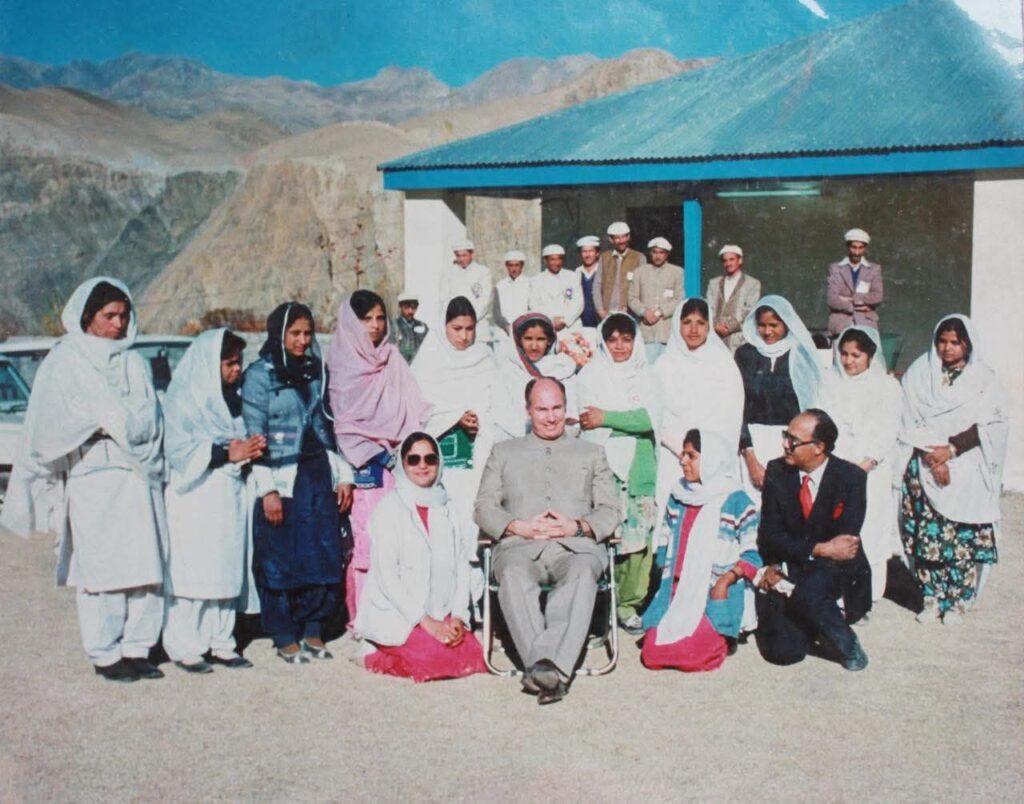
The long-term impact was remarkable. A 1992 medical study reviewing twelve years of iodized salt supply to Chitral, Gilgit and Hunza found that visible goitre prevalence had fallen from 61.36 percent to just 4.68 percent.8
By the mid-1990s, iodized salt had become widely accepted even in remote communities. A later study in Lotkoh Valley, Chitral, found that 85 percent of surveyed families used iodized salt exclusively.9
What had once been a common and devastating feature of life in Chitral and Gilgit-Baltistan was largely brought under control through a simple public health intervention: adding iodine to salt. The victory against the endemic disease came with the support and vision of Prince Karim Aga Khan IV and his agencies, which played an important role in advancing health services, nutrition programs, and community-based public health initiatives in the region. As a result, generations of children were spared the physical and intellectual disabilities that had once burdened the mountain communities.
(The text has been lightly refined with ChatGPT assistance. The research is Khowari’s original work.)
References
- Khoja, S., Luby, S., Ahmed, Z., & Akber, A. (2000). Effectiveness of health education in promoting the use of iodized salt in Lotkoh, tehsil Chitral, Pakistan. Journal of Pakistan Medical Association, 50(9), 296–300. https://ecommons.aku.edu/pakistan_fhs_mc_chs_chs/443/ ↩︎
- McCarrison, R. (1908). Observations on endemic cretinism in the Chitral and Gilgit Valleys. The Lancet, 172(4444), 1275–1280. https://doi.org/10.1016/S0140-6736(01)62987-8 ↩︎
- Ismaili.Net. (1976, March 15). Timeline entry regarding Prince Karim Aga Khan remarks on iodized salt in Northern Areas. https://ismaili.net/timeline/76.html ↩︎
- Aga Khan University. The Aga Khan Health Services – International Newsletter No. 01 (1979). Book 4. https://ecommons.aku.edu/akuh_newsletter/4/ ↩︎
- Prial, F. J. (1980, November 6). In Pakistan Mountains, iodized salt eases plight. The New York Times. https://www.nytimes.com/1980/11/06/archives/in-pakistan-mountains-iodized-salt-eases-plight.html ↩︎
- Aga Khan IV. (1983, May 14). Speech by His Highness Prince Karim Aga Khan at the inauguration of the Singal Medical Centre, Singal, Pakistan. The Ismaili. https://ismaili.net/speech/8305143.html ↩︎
- Aga Khan University. The Aga Khan Health Services – International Newsletter No. 01 (1979). Book 4. https://ecommons.aku.edu/akuh_newsletter/4/ ↩︎
- Ali A, Khan MM, Malik ZU, Charania BA, Bhojani FA, Baig SM. Impact of the long term supply of iodized salt to the endemic goitre area. J Pak Med Assoc. 1992 Jun;42(6):138-40. PMID: 1369614. ↩︎
- Khoja, S., Luby, S., Ahmed, Z., & Akber, A. (2000). Effectiveness of health education in promoting the use of iodized salt in Lotkoh, tehsil Chitral, Pakistan. Journal of Pakistan Medical Association, 50(9), 296–300. https://ecommons.aku.edu/pakistan_fhs_mc_chs_chs/443/ ↩︎
Posted on 25 April 2026