7 January 2026: Legendary Khowar Poet & Singer, Iqbal uddin Sahar Passes Away
by Zain-ul-Mulk
(A.I translation from Urdu)
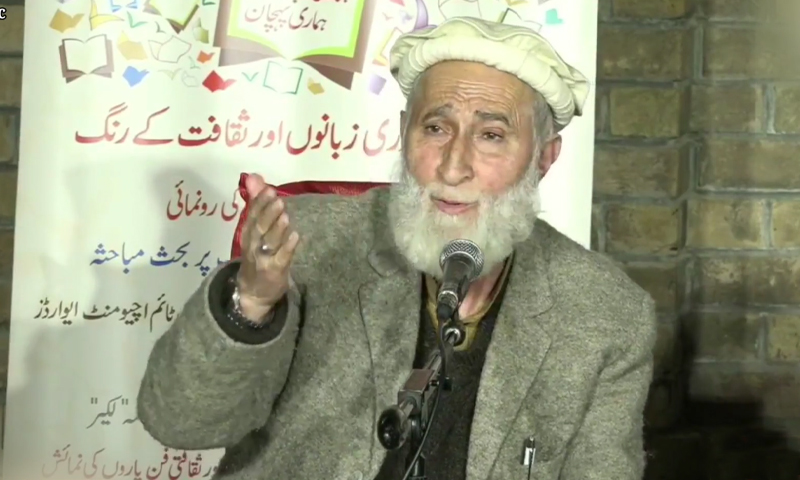
Iqbaluddin Sahar was not merely a name but an era in himself — an era in which voice, word, melody and emotion blended seamlessly to form the living essence of Khowar culture. A truly multifaceted personality, Sahar remains a source of pride for the cultural and literary heritage of Chitral. His contributions to Khowar music, poetry, singing, stage hosting, sports commentary, voice-acting, satire and serious expression have left indelible marks that time cannot erase.
Born in 1951 in the scenic village of Shoghor, Chitral, Sahar inherited artistry as a family legacy. His great-grandfater, Wazir Rehmat was an administrator and fighter who sided with Gohar Aman, the ruler of Yasin, against Maharaja Kashmir during the 19th century. Sahar’s grandfather, Darvesh Ghazi, migrated from the lush village of Chashi in Phundar (Gilgit-Baltistan) to Chitral, where he was granted land by the former ruler Shuja-ul-Mulk and appointed adjutant in the Royal Bodyguard. Sahar’s father, Rehmat uddin, was a renowned sitar player and vocalist of his time, and this musical lineage was clearly reflected in Sahar’s own sitar playing and singing — echoing his father’s voice but enriched with a new sensibility.
Also Read: March 2024: Well-known Sufi Poet & Dervish, Dool Mama Passed Away
Sahar’s educational journey was marked by dignity and consistency. He completed his middle education from Government High School Shoghor, matriculation from Government High School Chitral, intermediate and bachelor’s degrees from Islamia College Peshawar, and later earned his master’s degree from the University of Peshawar.
Poetry for Sahar was not merely a form of expression; it was an act of devotion. He began writing poetry in childhood, initially using the pen name “Sabir” before adopting “Sahar”, a choice that proved prophetic, as he himself became a source of enchantment for countless admirers. His voice carried love, sincerity and loyalty, transmitting emotion rather than merely sound. His musical compositions were simple yet deeply affecting, leaving a lasting imprint on the listener’s heart. He was also a voice artist par excellence and presented Khowar dramas in Radio Pakistan, the script of which were penned by himself. Some of his comic poems, dialogues and couplets have found a place in the daily rhythm of life in Chitral.
For many, Sahar’s voice is inseparable from childhood memories — from songs broadcast on Radio Pakistan to cassette recordings that played endlessly in homes. As tape recorders became common, Sahar’s presence entered households across Khowar-speaking region. Whether performing in Karachi, Islamabad, Peshawar or Chitral, he transformed every gathering into an unforgettable experience, captivating audiences with his vocal magic and humour. His contributions in Radio Pakistan Chitral and Khowar transmissions in Peshawar station were matchless.
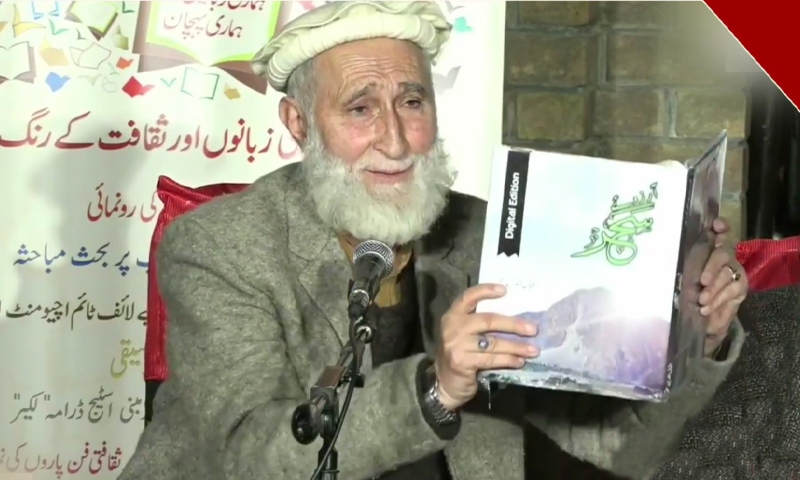
His poetry encompassed philosophy, self-awareness, timeless love and Sufi ecstasy. His first poetry collection, Arzoo-e-Sahar, was received not just as a book but as a profound intellectual experience. He experimented with all poetic forms, doing full justice to each through elevated thought, delicate language and emotional depth.
Sahar was also celebrated for his fluent and engaging commentary at polo grounds in Shandur and Chitral, where he elevated the sport into a living narrative filled with passion and insight.
Also Read: 7 July 2025: Amir Ullah Khan Yaftali of Laspur Passed Away
Apart from these, he had a humble personality embeded with religious teachings and cultural norms. He was deeply inclined towards Sufi teachings which were reflected both in his poetry and life. After witnessing nearly seventy-five springs, Iqbaluddin Sahar passed away in Peshawar, leaving behind a deep sense of loss across Chitral and Gilgit-Baltistan. Though his voice has fallen silent, it continues to resonate through his words, melodies and the collective memory of his people.
Published on 7 January 2026