Maureen Lines, Who Became Bibi Dow in Kalash

Khowari
Maureen Patricia Lines (23 October 1937 – 17 March 2017) was born in North London. She left her home for Paris when she was just 16-year-old. In 1961 she shifted to the USA, where she worked as a journalist for around 10 years.
Lines wrote in one of her books that after her rather extended stay in America, she had decided to travel through the Muslim world and visited Istanbul, Damascus, Cairo, Khartoum and Bahrain. In 1980, Lines arrived in Pakistan and was struck not only by the unique culture of Kalash people but also by the backwardness of their area, particularly in terms of health and hygiene facilities.
Also Read: Beyond the North-West Frontier by Maureen Lines
Lines came back again in 1981, after saving money from interior decoration and painting in England, and was given a two-month permit by then-deputy commissioner of Chitral, Shakil Durrani. While in Birir village, she was invited to by a local woman, Taqdira, to stay at her home. An incident during that stay, however, altered her life forever.
“I heard a cry for help, and ran to the scene to discover a young girl bleeding from her head after a tree branch struck her head,” Lines said.
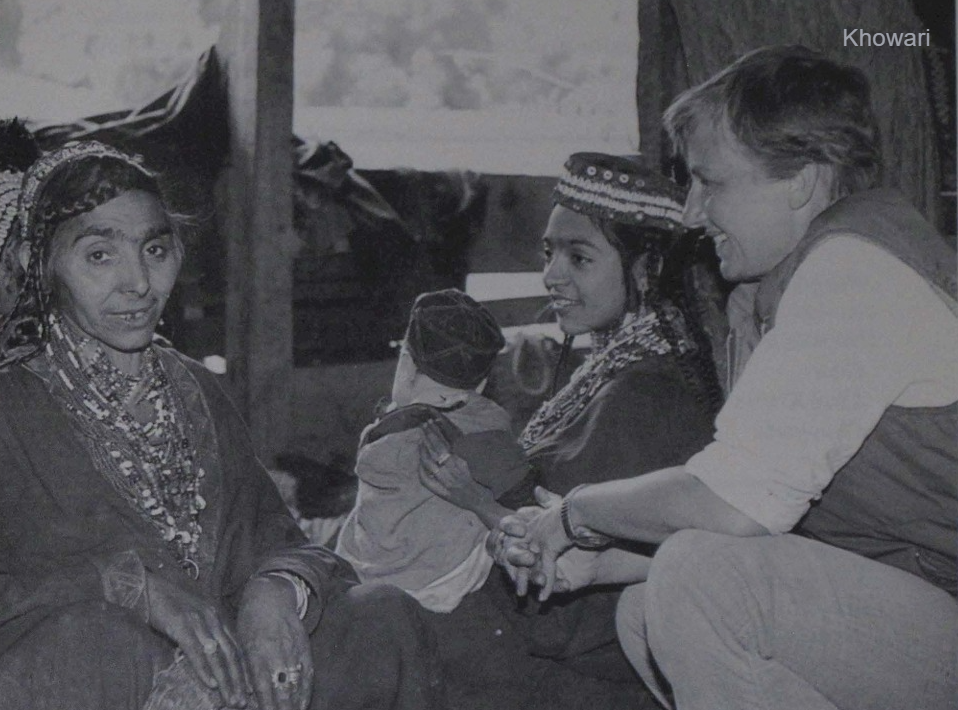
She had basic first-aid training and could not treat the girl but she washed the wound, and the girl luckily recovered.
Lines then went to New York and received two years of training as an emergency medical technician in 1984 and returned to Kalash Valley. “I had four puppies, a rucksack of medicines, a plastic bag and went door to door, village to village, treating sick people.”
In 1990, she returned to Pakistan and remained in the area as a travelling doctor and aid worker.
Also Read: 5 August 2002: Spanish Yeti Hunter, Jordi Magraner, Killed in Kalash
“I sold my house in London and completely moved to Pakistan. This is where by work is, my adopted 60-member family in Kalash and most of all my heart is,” she told the BBC in 2004.
Fluent in both the Kalashi and Chitrali languages, Lines was very close to the people of Kalash, who called her ‘Bibi Dow’. Lines was happy with this epithet as she believed the local people could not pronounce her name.
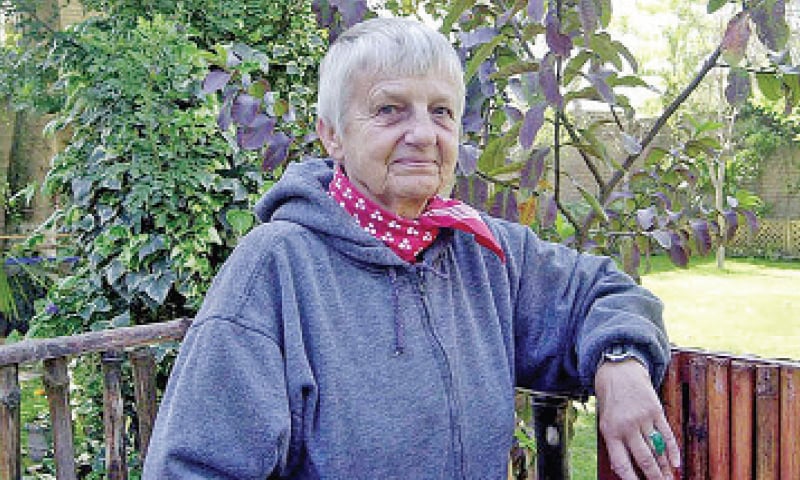
As a social worker, the British woman worked to provide proper hygiene system in the area and helped in building toilets and pipes of fresh water for them. She also helped in setting up stoves in the local residences to help cope with eyes and lung diseases.
She also set up the Kalash Environmental Protection Society in 1993. In 1995, she started up the British charity, the Hindu Kush Conservation Association along with the then British High Commissioner to Pakistan Sir Nicholas Barrington and the World Pheasant Association President Keith Howman.
Lines, who was granted the citizenship of Pakistan 2004, was awarded the prestigious Tamgha-e-Imtiaz for her services to the people of Kalash in 2007. However, on the pretext of security, police personnel took Lines away from her home, in Birir village of Kalash Valley in 2012, and whisked her to a rundown Governor cottage in Chitral town. The Taliban are after her, she was told.
Also Read: Global Pandemics and Chitral
Apart from being a social worker, she was also a prolific writer who penned several books on the Kalash culture and Hindu Kush region.
These include Beyond the North-West Frontier: Travels in the Hindu Kush and Karakorams, Journey through Jalalabad, The Kalasha people of North-Western Pakistan and The Last Eden.
Through her articles published in leading English newspapers, she highlighted the issues of people of Kalash, the infringements on the greenery of the province and protection of heritage sites.
She died 18th of March 2017 in Peshawar and was buried at the Gora Qabristan for the Christian community in Peshawar.
Posted on 29 September 2025