Sher Mulk: Life, Love & Poetry
by Hidayat ur Rehman
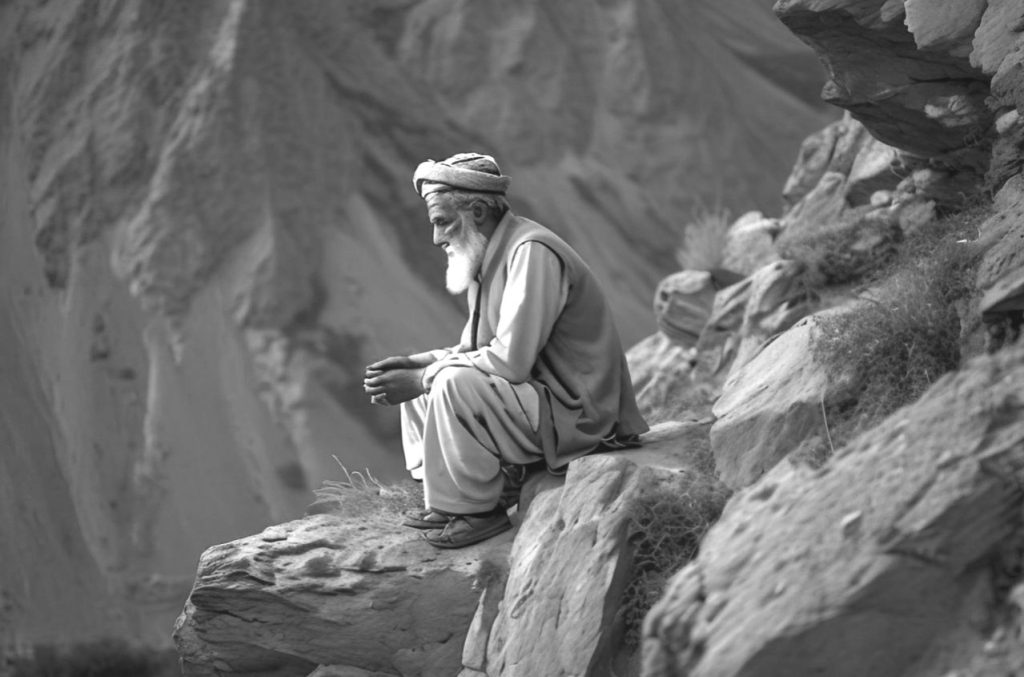
Man expresses his emotions and feelings in different ways. He sometimes represents his ideas through pictures and at times, he also resorts to the engraving of stones and molding of clays for the vivid display of the warmth of his days and the agonizing moment of the night along with the restless pulsations of his heart. These are the representation of a restless heart. But the best manifestation of one heart craving is possible only through poetry. Poetry is that natural aspiration which helps him express beautifully through words whatever, he perceives, conceives and feels with intensity. Now here I would like draw a sketch of one of Chitral’s prominent poet; Sher Mulk’s poetry and love.
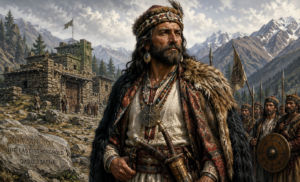
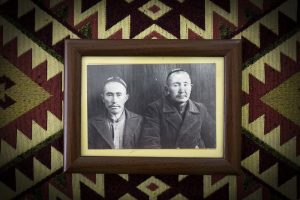
The character of Sher Mulk has always haunted the writers, in particular, and the people in general, with a strong feeling of suspense, mystery, awe and a passionate romance. Sher Mulk (1895c-1940) was a Khowar poet from Nogram Mulkho in the reign of Mehtar Shuja-ul-Mulk. He was commonly known as Gaderi Lal (the mad feudal lord). He was the contemporary of other celebrated Chitrali poets like Gul Azam Khan, Ziarat Khan Zirak (Sonoghro Malang) and Khuda Rehmat. Sher Mulk was a member of the Muhammad Doste (Mah Doste) a sub-section of the Reza Khel tribe, Shuja ul Mulk alias Shujal Lal (not to be confused with Mehtar Shuja-ul-Mulk) was his ancestor. Shujal was a notable warrior and had great influence in the tribal politics during early period of Mehtar Aman-ul-Mulk. He was the Jagirdar of Shagrum Tarich but his lands were located in different parts of Chitral i.e. Nogram, Muzh Gol, Orghouch, Mori, Warijun, Buni and Nogram (source: Kitabul Qalang). He was killed in a war against Dogras in Gilgit with his sons Sahib-ul-Mulk and Hasan-ul-Mulk (Ghufran 1921). Sher Mulk was his grandson. He was born at Warijun. During his early childhood, life was very tough for the reason that most of his lands had been confiscated. In this critical junction of life, Mehtar of Chitral had ordered him to become part of his royal service (Shadari) but he refused and consequently, astringent relations had developed between them.His romance is well-known in the folklore of Chitral.
He was married to a woman of Yarkhun (Rehmat Karim Beg 1997 and Karim Khan Lal). After his marriage he fell in love with another woman who was in his in law in relation and he could never marry her. In one of his couplet he says;
Just khongor hanu no bir mulka ashkar khul roi khabar
Ma zhan qalibo laleer, hardi chomikar kia khabar
(Two swords can’t be in one sheath, the fact is known to all in the country. My beloved only sees the body, not my aching heart.)
Professor Rehmat Karim Beg revealed the love story in following words “ Sher Mulk received the news of the success of the mission and was overjoyed to have the prospects to marry whom he loved dearly. Young Sher Mulk avidly counted days and hours to meet his fiancé but according to Khow social taboos they are not allowed to meet till the Nikah unceremoniously takes place. His would be in laws had decided among themselves secretly to give the elder sister to Sher Mulk in lieu of the younger for whom he coveted. At the movement of Nikah the elder was dressed in her bridle attire plus a veil and Nikah was struck, with groom totally unaware of the trick played against him. It is thus the departure of the marriage party took place with a bride whom they had wooed. Soon after the feasts and festivities at the groom house the secret became known to the ill-started lover that his beloved the only object of his aspiration, had been replaced by someone else whom he knew but nerve wooed”(Rehmat Karim Beg 1997:188).
His beloved was married to someone from village Reshun. One day he was called by the rival to his house for entertainment in the evening. After dinner he requested to sing a song with sitar. This concert continued till early morning when nightingale began to warble at dawn. Sher Mulk sung following couplet in a complaining tone;
Mayon-e mo cholay ki ma dinnar orray asur
Tu tantay chuli kui bis ma dusto hardi marsr chiyur
(O, nightingale with hold your song for which as my beloved is asleep. Your song shall disturb her. You will fly away having her blasé but she will be displeased with me)
Sher even feels respects for his rivals and unlike other poets, calls him with courtesy;
Ta moshot yaar no rem ma mitar zhaw
Tu bacho zhur ki biraw daq ameero zhaw
(I will not not your husband friend for he is my prince. If you are the daughter of the king, I am too the son of a noble.)
But the tragedies for Sher had not ended as the husband of his beloved remained alarmed of his love and later on killed his beloved. This loss for Sher Mulk was now unbearbale and he attempted to find solace in the leap of poetry. Fortuitously Gul Azam Khan and Zirak were also residing same area in Molkhow at that them; both of them in exile. Gul Azam, the son of the chief Wakhan valley was in Chitral when his father was ousted from the throne and Sonoghro Malang, another legendary poet from Sonoghur was exiled to the barren land of Mulkhow when he acted against the wish of the Mehtar during the sectarian conversion campaign. Later on sister of Sher Mulk was married to Gul Azam Khan. These poets had great sway in singing, Sitar and composing romantic lyrics. At once state officials had arranged a musical program in Molkhow for the crown prince Shahzada Nasir-ulMulk where Sher Mulk sung famous lyric of Gul Azam Khan. In this song he described the social conditions and role of aristocracy in that time. On the presentation of this song Shahzada Nasir-ul-Mulk became reluctant and irritant and went out with Ataleq Sarfaraz Shah and Qurban Muhammad. With the passage of time his livelihood has been stiff and sturdy, and he suffered mentally and eventually died on a cold night, near naroyeyo tali (willow of inhumaneness) in Koghuzi in 1940 while travelling from Chitral to his village.
Kafiro rakhum no boi musulmano zhan puluyeer
Ta malang oh no korom oh ki aret zom uluyeer
(The infidel (non-believer) does not show mercy. The Muslim feels compassion. Your Malang (a term used to refer to a spiritual guide or a mystic) never complains. If he ever does, the mountains will crumble and fall due to the impact.)
Uploaded on 21 November 2024